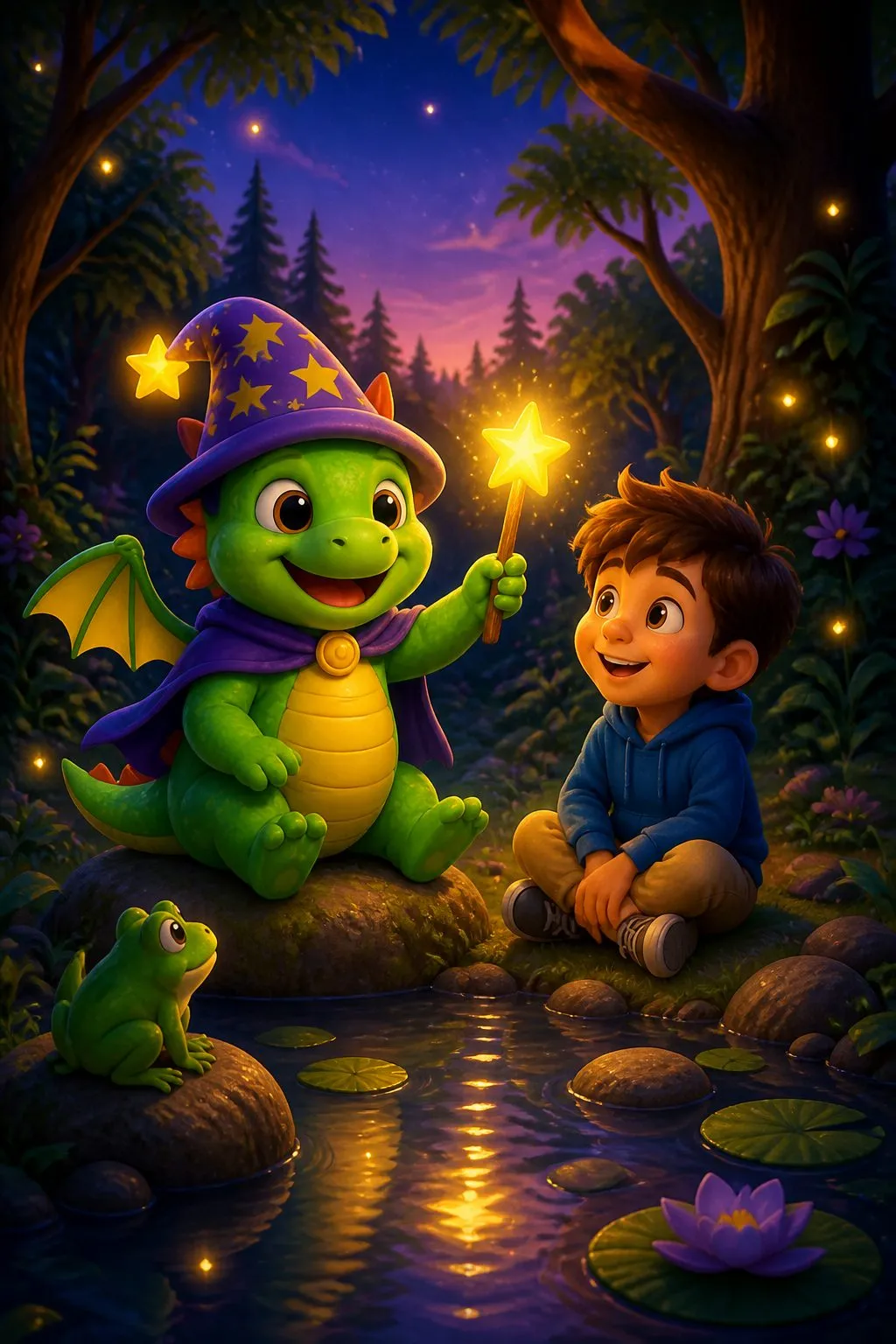
Most bedtime stories fail at bedtime for a boring reason: they were written for a room full of children, not for the one in front of you. A three-year-old doesn’t want a story. They want their story — with their name, their dog, and the thing they were worried about at dinner.
I have been building a children’s app and telling bedtime stories for a good while longer, and the five things below are the ones that keep working. None of them need an app. All of them are a bit easier with one.
1. Make it about them, literally
At three, hearing your own name in a story is still magic. You do not need a plot. You need their name, a familiar place, and one small thing that happens.
“Sidd walked to the corner shop. It was raining. He found a snail on the wall.” That is a whole story at three. The child is not following a narrative arc; they are checking that the world in the story matches the world they know, and then enjoying the one thing in it that is new.
The practical version of this: before you start, pick three real details from the day. The blue umbrella. Grandma’s slippers by the door. The neighbour’s cat. Drop them in. A child will forgive almost any weakness in a plot if the details are true.
2. One worry, gently
Tonight’s worry is the best story seed you have — the dentist tomorrow, the new baby, the friend who took the shovel. A story lets a child rehearse the scary thing from a safe distance, with a hero who gets through it. Keep it kind: the fear is real, and it turns out okay.
Two rules make this work rather than backfire. First, the hero is not the child — the hero is the character, and the child is beside them. It is much easier to be brave for somebody else. Second, the worry gets solved by something ordinary: asking for help, taking a turn, counting to ten. Nothing magic. The child has to be able to copy it tomorrow.
If a story about the worry makes the worry bigger, stop and tell a story about a snail instead. You will know within a minute.
A three-year-old doesn’t need a new story every night. They need the same brave hero, in a new small adventure.
3. Same hero, every night
Repetition is not laziness at this age; it is how the learning happens. A recurring character gives every story a familiar anchor, so the new part — the value, the word, the worry — is the only thing the child has to hold. Change everything at once and nothing lands.
This is also the part parents get wrong most often, usually out of guilt. You do not owe your child novelty. A hero they know, in a place they know, doing something small they have not seen before, beats a brand-new world every time.
It is also why we built Dinomy around one character your family makes together, who then stars in everything: the stories, the songs, the lessons. Same face, new night.
4. Short beats long
Five to eight minutes is plenty. If they ask for more, that is a win — say “tomorrow”. Ending calmly matters more than finishing the plot.
A long story at bedtime tends to do the opposite of what you want. The child gets a second wind around minute twelve, the story gets more exciting because you are trying to keep their attention, and now you are awake together at half past eight negotiating. Short and slightly dull at the end is the target. The last line should be boring on purpose: “and then they went to sleep” is a perfectly good ending, every night, forever.
5. Read along, lightly
If you are using a screen, pick one that shows the words and highlights them as they are read. Nobody is teaching reading at bedtime — but the eye-to-word link builds quietly, and it gives a wriggly child something to follow with a finger.
Keep the room the same otherwise: same light, same order, same goodnight. The story is one item in a routine, not the routine itself.
A recipe you can use tonight
If you want something concrete, this is the shape that works in our house:
- Name and place. “This is a story about Sidd, in the park behind our flat.”
- The hero arrives. The character the child knows, doing something small and silly.
- One problem, child-sized. The swing is taken. It is raining. Somebody is scared.
- A plain solution. They ask. They wait. They try again. They say sorry.
- A boring, warm ending. Home, dinner, bed. Say goodnight in the story before you say it in the room.
Five beats, five minutes. You can improvise inside that scaffold indefinitely, and a three-year-old will happily hear a variation on it three hundred times.
When you have nothing left
Some nights you are empty. That is what the app is for, and it is honestly why it exists: not to replace the story you tell, but to have one ready on the nights you cannot tell one.
The other thing worth saying: if tomorrow is the dentist, or the first day at a new nursery, a story is the cheapest preparation there is. We wrote a whole piece about that one — how to introduce a dentist visit with a story — because it is the request we hear most.
Make this in Dinomy
In Dinomy you make the character once — describe it, photograph a favourite toy, or send in a crayon drawing — and it stars in every story after that. You type what the story is about, tap a value or habit for it to carry, choose short, medium or long, and the story comes back illustrated and read aloud with the words lighting up as they are spoken. Your child is in it by name. You read it first, before your child ever sees it, and you can start the next episode with the same hero tomorrow.
