The dentist is the request we hear most, and it is a good one, because it is a small, dated, specific fear with a known shape. You know exactly what will happen on Thursday morning. Your child does not. A story is the cheapest way to close that gap.
Here is how to do it without accidentally making it worse.
Two days early, not the night before
The night before is too late. A story told at bedtime on Wednesday about Thursday’s appointment gives a child a fear to sleep on and no time to ask questions.
Two days is about right for a three or four-year-old. Long enough that they can bring it up themselves, short enough that it does not become a background dread. Tell it Tuesday. Let Wednesday be normal. If they ask about it again on Wednesday, tell it again, the same way — the sameness is half the reassurance.
Be accurate, in the boring details
The instinct is to make it lovely. Resist it. A story that promises a fun, easy, quick visit sets your child up to feel lied to at the first strange thing, and then they stop trusting the next story you tell them.
Accuracy is the whole trick, and it means the mundane details:
- The waiting room, and that there will be a wait.
- The chair that goes backwards, slowly, and the noise it makes.
- The bright light that swings over.
- The dentist wearing gloves and a mask, and that they will still be a person under it.
- The little mirror. The tickly brush. The tiny water squirter.
- That it might feel strange, and that strange is not the same as hurting.
- That you will be in the room, right there.
If you do not know something — whether there will be an X-ray, whether they will need to lie all the way flat — say so in the story. “And nobody knew yet if the tickly brush would come out that day.” Children handle uncertainty much better than they handle a promise that breaks.
Give them one job
A child with a job is not a child being done to. Pick one small, real task and put it in the story:
- Counting the ceiling tiles.
- Holding the toy, or your hand.
- Opening wide like a lion when the dentist asks.
- Choosing which sticker at the end, if there are stickers.
The job needs to be genuinely doable and genuinely theirs. In the story, the character does the job too, and does it slightly wrong first — forgets to open wide, has to be asked twice. That is the detail children remember.
Put the character in the chair, not your child
This is the one thing I would change about most “going to the dentist” books. The child in the story is the reader, and if the story child is brave and calm, a frightened child now has a second problem: they are not doing it right.
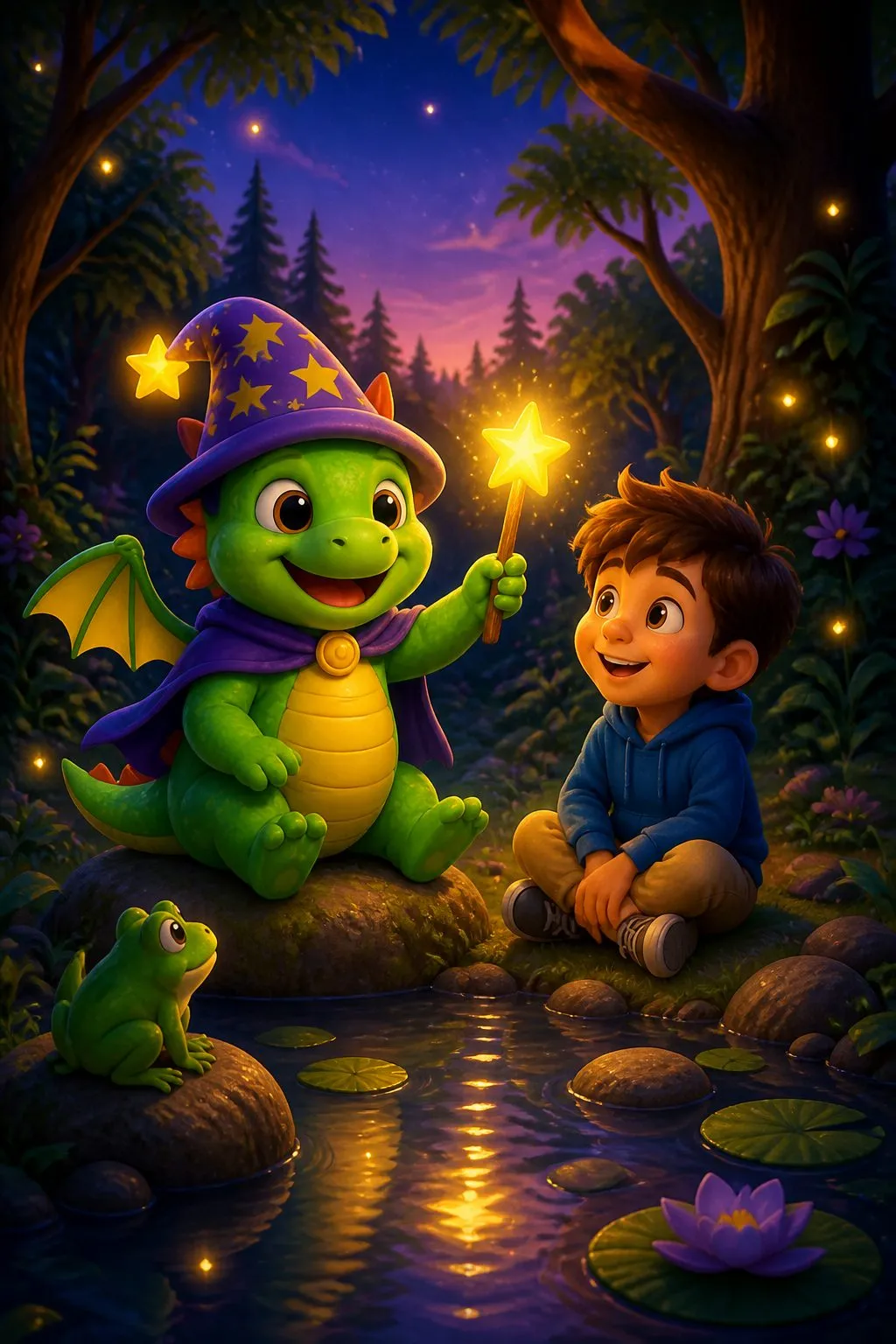
Put your child’s own character in the chair instead. The green dragon is the one who is nervous. Your child is beside them, telling them it will be fine, holding the toy. Now your child is the brave one, and bravery has become something you do for someone else — which is much easier at four than being brave for yourself.
Then on Thursday you have a shared reference: “remember what Draco did?” That sentence is worth the whole exercise.
Tell it once more in the car park
Five minutes before, in the car, tell the short version. Three sentences.
“We go in. We wait a bit. You sit in the chair that goes backwards, and I sit right there, and you open wide like a lion.”
No new information. Nothing added. The short version’s job is only to remind them that they already know what happens.
What to do if it goes badly anyway
Sometimes it does. The child cries, refuses the chair, will not open their mouth, and you leave having achieved nothing.
Tell the story again that evening, and let the character have exactly the same day. Draco did not want to sit in the chair either. Draco came home and had toast. Next time, Draco sat in the chair for a count of five and then got out again, and that was fine too.
A story that only ever ends in triumph is not a tool your child can use on a bad day. One that can also end in “we tried, we went home, we will try again” is.
The same shape works for everything else
Nursery on Monday. A new baby. An injection. Getting a haircut. A flight. The structure does not change: tell it early, keep it accurate including the boring parts, give them one job, and put the character in the difficult seat.
It is the same principle as the recurring-hero point in bedtime stories for a 3-year-old — a familiar character carrying one new thing is what a small child can actually hold.
Make this in Dinomy
Type what is happening — “Draco goes to the dentist on Thursday and is a bit nervous” — pick the habit or value it should carry, choose how long it should be, and Dinomy writes and illustrates it with your character in it and your child in it by name, read aloud with the words lighting up. Stories land in your review area first, so you read the whole thing before your child sees a word of it, and if the wording is not right you can regenerate it or write it again. If it goes well, the next episode continues with the same character.
